Reverse Total Shoulder Arthroplasty · InSet® Reverse Shoulder System
Reverse Shoulder Replacement in Salt Lake City & Park City, Utah
When the rotator cuff is torn beyond repair, the shoulder can lose the ability to lift the arm at all, and an ordinary replacement will not fix that. A reverse shoulder replacement changes the mechanics of the joint so the deltoid muscle takes over. Dr. Daniel Hatch performs reverse replacement with the InSet® Reverse Shoulder System for patients in Park City, Heber City, and the Salt Lake Valley.
Why a Reverse Design Exists
An anatomic replacement depends on the rotator cuff to keep the new ball centered in its socket. When the cuff is gone, the ball rides upward, the joint wears unevenly, and the arm becomes weak and painful. Reverse replacement was developed to solve exactly that problem, and it was designed to:
- Quiet the pain of cuff tear arthropathy, including the ache that disrupts sleep
- Restore the ability to raise the arm to shoulder height and above
- Bring back independence with dressing, grooming, driving, and household tasks
- Offer a dependable solution for certain fractures and failed earlier surgeries
Conditions That Call for a Reverse Replacement
- Cuff tear arthropathy: arthritis that develops after a large rotator cuff tear has gone unrepaired for a long time
- Massive irreparable cuff tears: including pseudoparalysis, when the arm cannot be lifted even though the joint itself is not severely arthritic
- Complex fractures near the top of the arm bone: especially in older adults whose bone may not hold plates and screws reliably
- Failed shoulder surgery: an earlier replacement or fracture repair that has broken down
- Arthritis with major socket bone loss: where an anatomic component cannot be securely anchored
The Mechanics, in Plain Terms
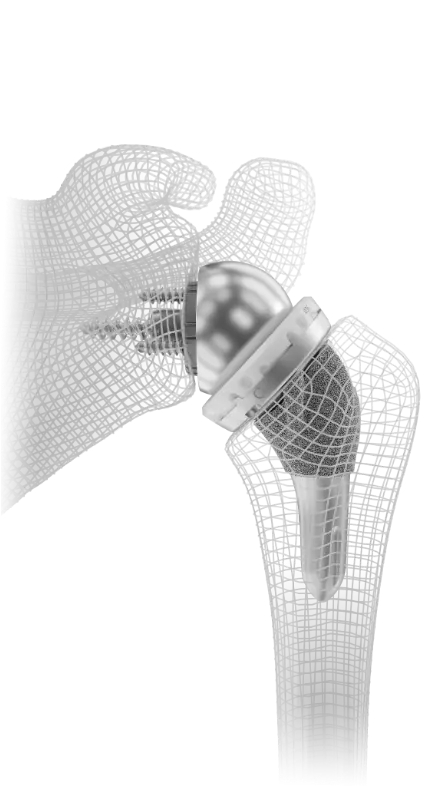
Normally the ball of the joint is on the arm bone and the cup is on the shoulder blade. A reverse replacement trades places: a smooth metal sphere, called a glenosphere, is fixed to the shoulder blade, and a cup is fitted to the top of the arm bone. That shift moves the joint’s pivot point and puts the deltoid under the right amount of tension, so this large muscle can lift the arm on its own without help from the missing cuff.
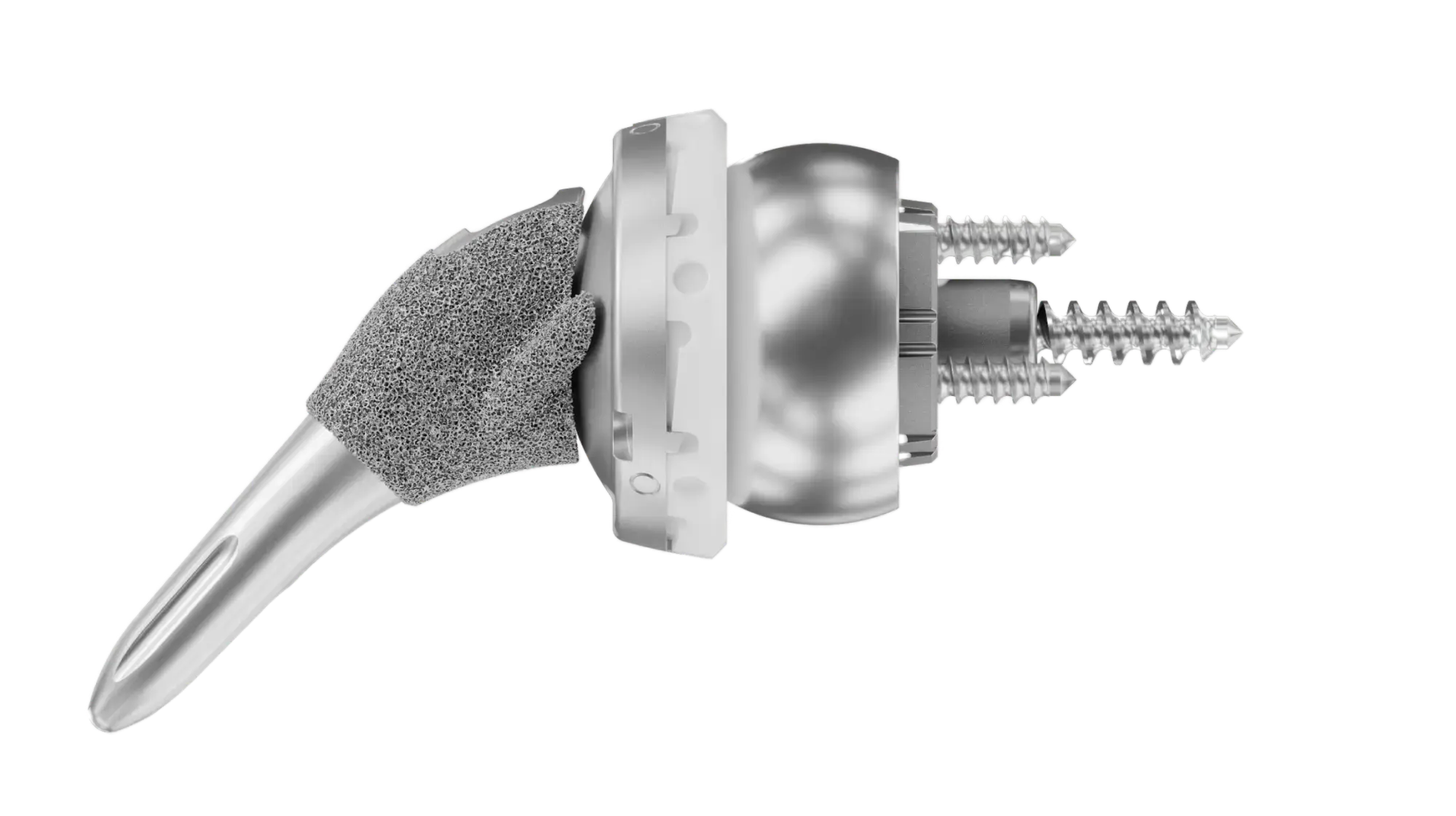
The InSet® reverse shoulder implant from Shoulder Innovations.
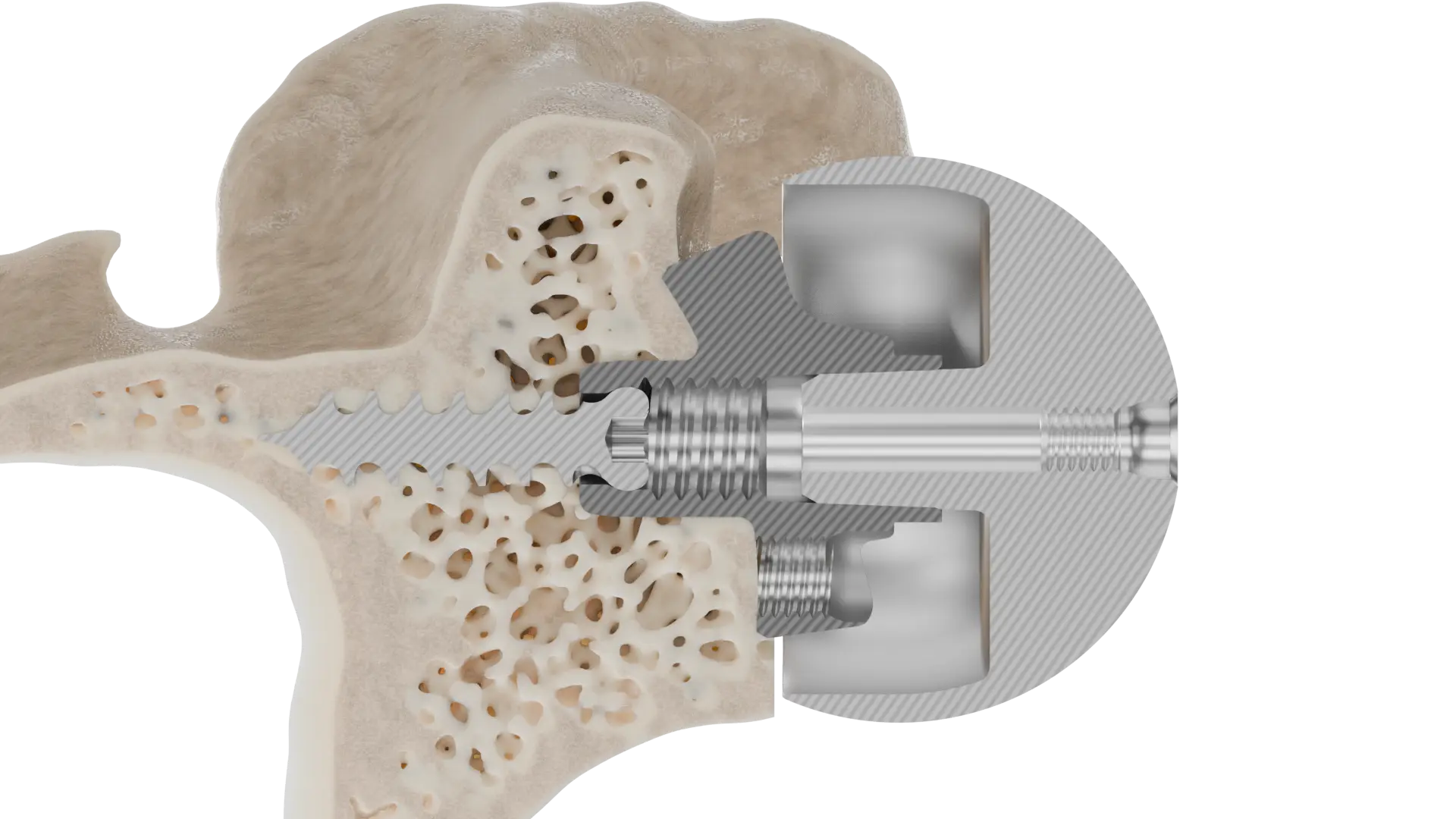
The InSet® reverse baseplate in the socket bone.
The Implant
The InSet® Reverse Shoulder System
Dr. Hatch performs reverse replacement using the InSet® Reverse Shoulder System from Shoulder Innovations, a company focused exclusively on the shoulder. Its key feature is a lateralized-lateralized design, with lateralized options on both the glenoid and humeral sides, intended to improve range of motion and post-operative function.
On the arm side, porous titanium surfaces are designed to encourage your bone to grow into the implant, and the design is intended to conserve as much bone as possible. If you already have an InSet® anatomic replacement and later need a reverse, the humeral component can frequently stay in place and be converted, which can make a revision simpler.
Because shoulders that need a reverse often have worn or eroded sockets, Dr. Hatch frequently plans these operations on a 3D model from a CT scan, deciding baseplate placement, screw paths, and implant size before you reach the operating room.
Precision
Planning Around Your Bone
A 3D plan shows Dr. Hatch how much healthy socket bone is available and where it is strongest. He can then choose the implant that fits, aim the baseplate into the best bone, and anticipate challenges in advance. That preparation is intended to support a more predictable operation.
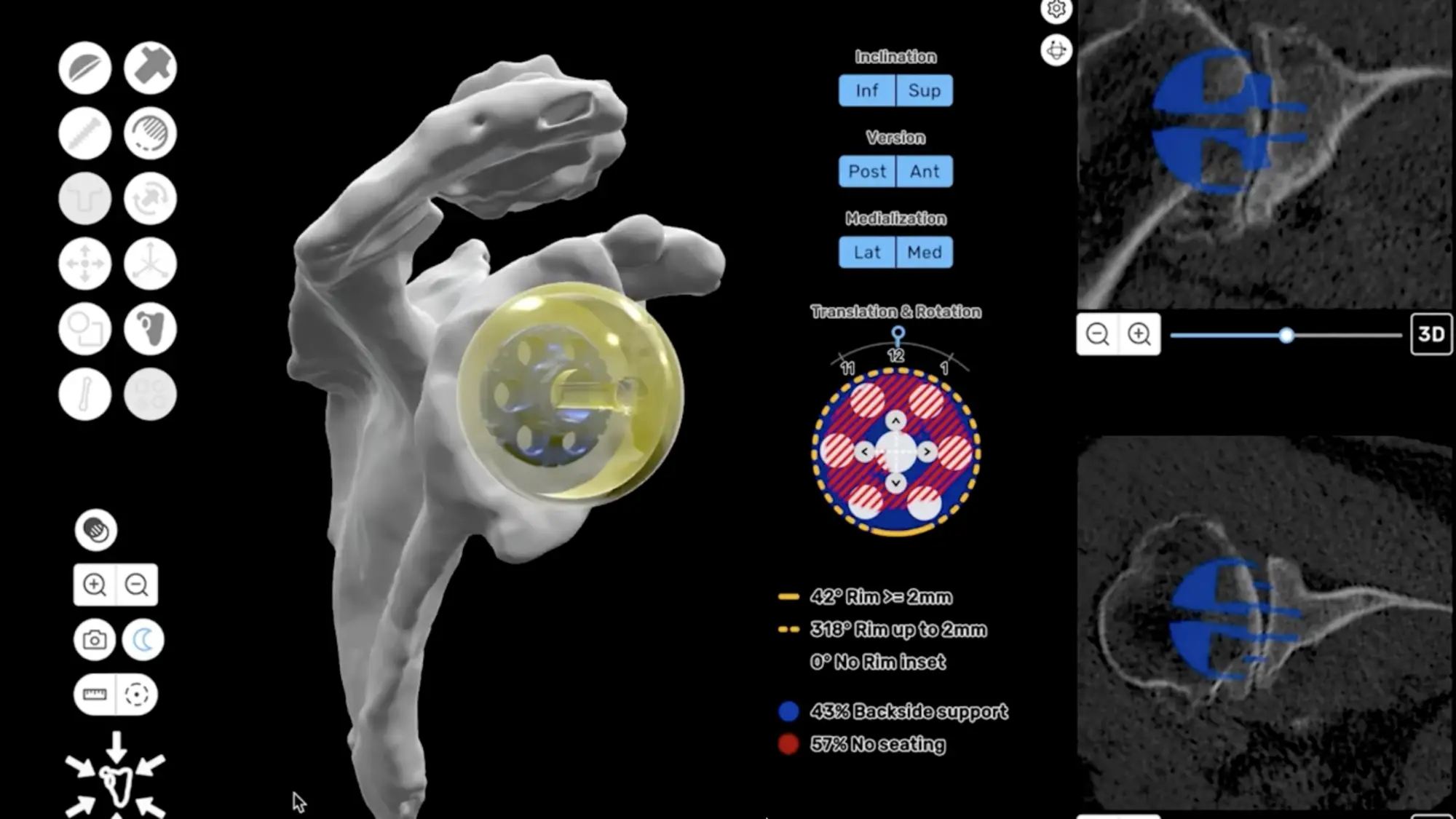
A CT-based 3D plan for a reverse shoulder replacement.
Surgery and Recovery
Reverse replacement is done under general anesthesia, usually with a nerve block for comfort afterward, and takes roughly one to two hours. Depending on your health and support at home, you may go home the same day or stay one night. Recovery follows Dr. Hatch’s Reverse Shoulder Arthroplasty protocol, which focuses on protecting the new joint early and then building deltoid strength, since that muscle now powers the arm.
- Weeks 0 to 6: sling protection, gentle hand, wrist, and elbow motion, and guided passive shoulder movement
- Weeks 6 to 12: using the arm for everyday tasks and starting progressive strengthening
- Months 3 to 6: many people are reaching overhead and easing back into recreation, with strength improving through the first year
Risks and Limitations
Reverse replacement is a dependable operation for well-chosen patients, but it has its own set of risks. Beyond the general risks of infection, bleeding, nerve injury, fracture, stiffness, and implant wear or loosening, a reverse shoulder can dislocate, and the bone of the shoulder blade can wear where it contacts the implant, a finding called scapular notching. Turning the arm inward and outward may not fully return. Dr. Hatch will explain what you can realistically expect for your shoulder. Results vary.
Frequently Asked Questions
How is a reverse replacement different from a total shoulder replacement?
A total (anatomic) replacement keeps the ball on the arm bone and relies on a working rotator cuff. A reverse replacement puts the ball on the shoulder blade so the deltoid can lift the arm when the cuff cannot.
How long do reverse shoulder replacements last?
Long-term studies show many reverse replacements still functioning well beyond ten years. Bone quality, activity, and following lifting guidelines all influence how long an implant lasts.
Will I be able to lift my arm over my head?
Restoring the ability to raise the arm is the main purpose of the operation, and many patients regain comfortable overhead reach. Rotation and heavy lifting may stay somewhat limited, which Dr. Hatch will review with you beforehand.
Can I go home the same day?
Many healthy patients with good support at home do. Dr. Hatch will recommend same-day or overnight care based on your overall health.
Talk With Dr. Hatch About Reverse Shoulder Replacement
If a failed rotator cuff or arthritis has taken away the use of your arm, an evaluation will show you what a reverse replacement could give back.