Shoulder Arthroplasty · Salt Lake City · Park City · Heber City
Shoulder Replacement Surgery in Salt Lake City & Park City, Utah
For a shoulder worn down by arthritis or a rotator cuff that has failed, replacement surgery swaps the damaged joint surfaces for smooth implant components, designed to help the arm move again without that grinding, constant ache. Dr. Daniel Hatch, a Harvard fellowship-trained shoulder surgeon, performs anatomic, reverse, and revision shoulder replacement for patients from Park City and Heber City to the Salt Lake Valley.
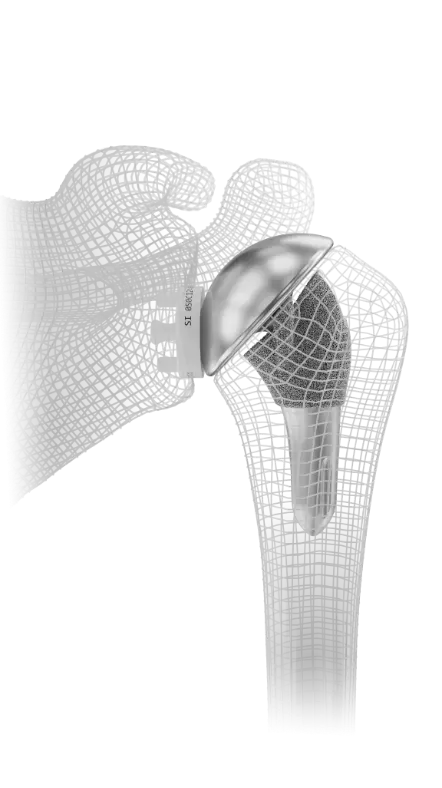
Signs It May Be Time to Consider Replacement
Replacement is rarely where shoulder care begins. Plenty of painful shoulders settle down with a few months of focused therapy, an injection, or a smaller arthroscopic procedure, and Dr. Hatch will always talk through those options first. The conversation changes when the joint surface itself is the problem. If your shoulder aches at rest, keeps you up at night, catches or grinds when you lift your arm, and has stopped improving with the treatments that used to help, a replacement may offer more relief than anything else left on the table.
How Shoulder Replacement Works
The shoulder is a ball-and-socket joint: the rounded top of the upper arm bone rests against a shallow socket on the shoulder blade. In arthroplasty, Dr. Hatch removes the worn cartilage and bone on both sides and fits implant components that glide smoothly against each other. Which design he chooses depends mainly on one question: is your rotator cuff still doing its job? A shoulder with a working cuff usually does best with an anatomic total shoulder replacement, which rebuilds the joint in its natural shape. A shoulder whose cuff can no longer hold the ball centered usually does best with a reverse shoulder replacement, which flips the ball and socket so the deltoid can lift the arm instead. Dr. Hatch also revises replacements performed elsewhere that have become painful, loose, or unstable.
Who Is a Good Candidate?
Dr. Hatch weighs three things: the condition of the joint surfaces on X-ray and CT, the health of the rotator cuff, and how well nonsurgical care has worked for you. Common reasons patients come to him for replacement include:
- Advanced osteoarthritis, inflammatory arthritis, or arthritis that developed after an old injury
- Cuff tear arthropathy, the arthritis that follows a large rotator cuff tear left unrepaired for years
- Collapse of the humeral head from avascular necrosis
- A badly broken upper arm bone near the shoulder, especially in older adults
- An earlier shoulder replacement that is no longer working well
Your age, activity level, and goals matter as much as your imaging. A skier in his fifties and a grandmother who wants to garden pain-free may both be good candidates, for different procedures and with different expectations. Dr. Hatch reviews your images with you in the exam room so you can see exactly what he sees.
Two Main Approaches
Anatomic Total or Reverse?
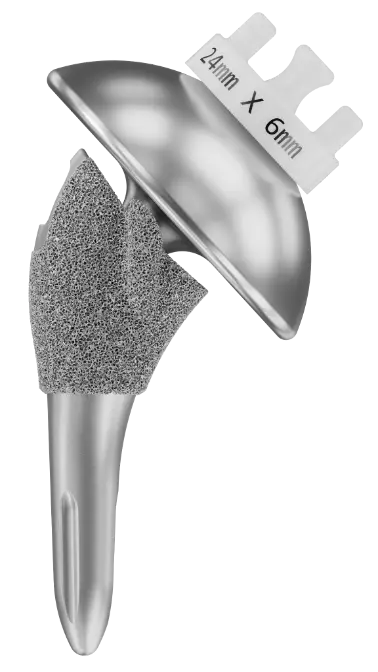
Anatomic Total Shoulder Replacement
Best suited to an arthritic shoulder whose rotator cuff is intact. A metal ball replaces the top of the arm bone and a new socket surface is fitted to the shoulder blade, preserving the joint’s natural layout and relying on the cuff for balance. A stemless option preserves more of the arm bone.
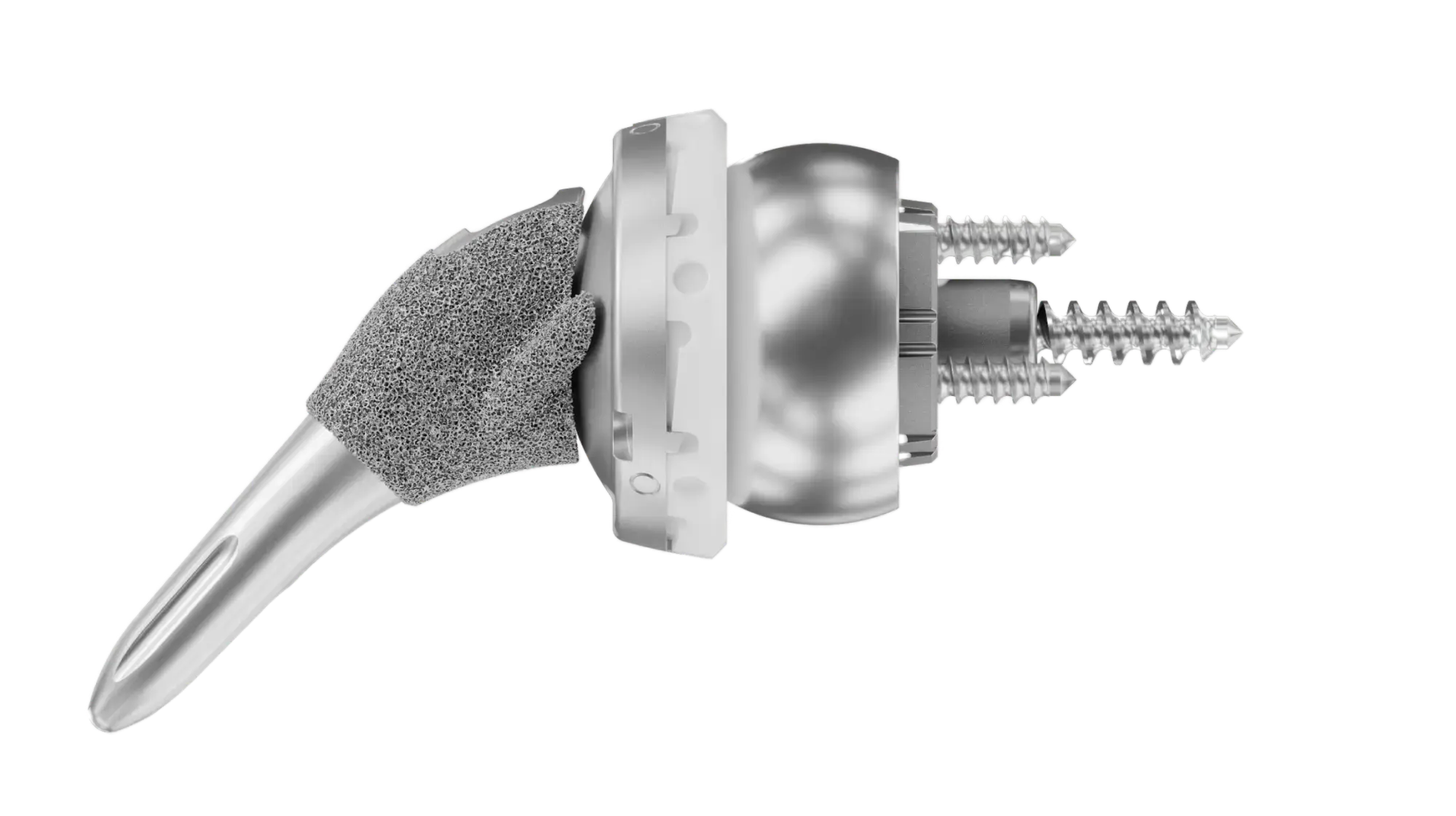
Reverse Shoulder Replacement
Designed for shoulders where the rotator cuff is torn beyond repair, for many complex fractures, and for some failed earlier surgeries. Putting the ball on the shoulder blade and the socket on the arm bone shifts the work of lifting to the deltoid muscle.
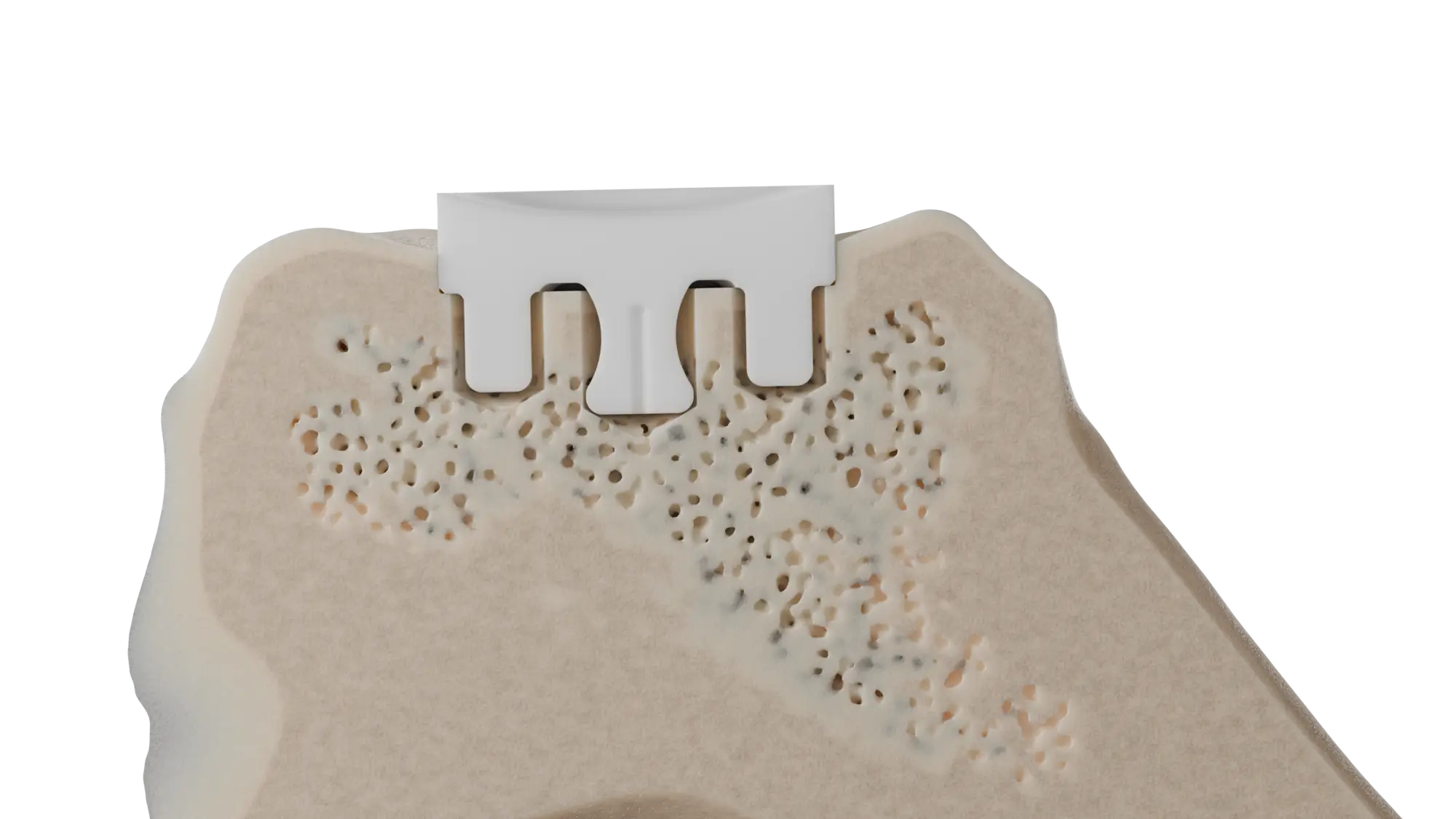
The InSet® glenoid is set into a prepared pocket in the socket bone instead of resting on top of it.
Implant Choice
Why Dr. Hatch Chose the InSet® Shoulder System
Dr. Hatch uses the InSet® Shoulder System from Shoulder Innovations, a company focused exclusively on the shoulder. In total shoulder replacement, its distinguishing feature is on the socket side. Rather than sitting on the surface of the shoulder blade, the InSet® glenoid is recessed into a carefully shaped pocket in the bone, a design intended to give it a more stable foundation.
The system is also built to conserve your natural bone, which matters if you are young and active enough that a future revision is possible. More preserved bone generally means more options later. For many patients, Dr. Hatch plans the operation ahead of time on a three-dimensional model built from a CT scan, and during your visit he can hand you a sample implant and explain why it suits your shoulder.
The Road From First Visit to Recovery
At your first visit, Dr. Hatch reviews your history, examines your shoulder, and goes over your X-rays. Many patients also have a CT scan so he can plan the implant size and position. On surgery day, many patients receive a nerve block that keeps the shoulder numb for hours after the operation, which usually takes between one and two hours. Many people go home the same day, and others stay one night, depending on their health and help at home.
Expect a sling for roughly the first four to six weeks. Physical therapy starts early with gentle motion and builds to strengthening over the following weeks, guided by Dr. Hatch’s rehabilitation protocols so you and your therapist always know the next step. Daily tasks like eating, dressing, and typing come back first; recreation follows over several months, and strength keeps improving for up to a year. Everyone heals at their own pace.
Realistic Expectations and Risks
Like any surgery, shoulder replacement carries risks, including infection, nerve injury, fracture, stiffness, implant wear or loosening over time, and instability (a particular consideration with reverse designs). Dr. Hatch will go over the risks that apply to you and be clear about what a new shoulder can and cannot do for your specific situation. Results vary from person to person.
Fellowship Training Focused on the Shoulder
Dr. Hatch completed the Harvard Shoulder and Elbow Fellowship at Massachusetts General Hospital and Brigham and Women’s Hospital and spent part of his training in France working alongside shoulder surgeons Pascal Boileau, MD and Laurent Lafosse, MD. Because his practice covers everything from first-line nonsurgical care to complex revisions, he can recommend the option that fits your shoulder, whether or not that includes surgery, and has the experience to handle complex cases. Learn more about Dr. Hatch.
Frequently Asked Questions
What age is too young for a shoulder replacement?
There is no strict cutoff. Younger, active patients are evaluated carefully because their implants need to last longer, which is one reason Dr. Hatch favors a bone-preserving system. Your symptoms and imaging matter more than the number on your birth certificate.
What makes the InSet® total shoulder system different?
The socket component of the InSet® total shoulder system is recessed into the bone instead of sitting on the surface, a design intended to improve stability, and the system is designed to help preserve natural bone.
Will I need to stay in the hospital?
Many patients go home the same day from Park City Surgery Center, and others stay one night at an area hospital. Dr. Hatch recommends the setting based on your overall health and the support you have at home.
Is shoulder replacement covered by insurance?
When it is medically necessary, shoulder replacement is generally covered by Medicare and many commercial plans, though coverage varies by plan. Our team checks your benefits before surgery is scheduled.
Which office should I visit?
Dr. Hatch sees shoulder replacement patients in Park City and Heber City and holds clinic days in Salt Lake City (Cottonwood Heights). One phone number, (435) 222-8675, schedules all three.
Find Out if Shoulder Replacement Is Right for You
An evaluation with Dr. Hatch will give you a clear picture of your shoulder and every option for treating it, surgical and nonsurgical.